
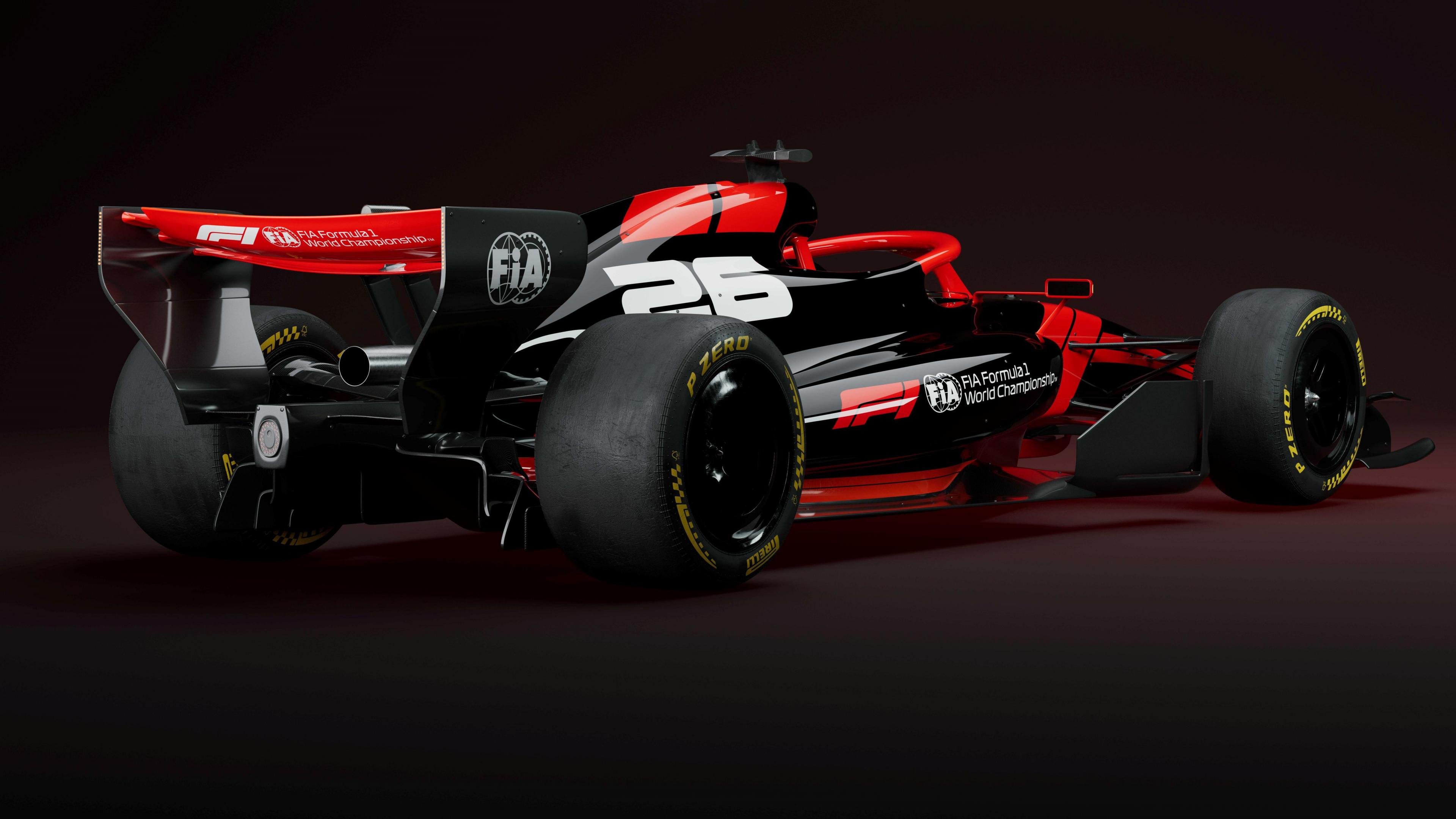
The vehicles for the 2026 season are expected to be more compact, agile and eco-conscious than this year.
F1 has introduced the simplified vocabulary that will be used to describe the advanced features of its upcoming 2026 regulations.
The championship is embarking on what is considered the largest technical shift in its long history starting in 2026, featuring fresh chassis and power unit regulations and the compulsory introduction of eco-friendly fuels.
The new power units, which retain the 1.6-litre V6 configuration, boast a greatly enhanced battery power, necessitating significant developments in the cars' aerodynamics.
During grand prix events, pilots will tactically deploy battery power – including during hot laps – to extract the peak result.
Broad surveys were undertaken with a wide range of fans, including dedicated enthusiasts and casual observers, to understand which terms would improve understanding of the main elements of the upcoming rules.
The stated goal was to present a set of intricate technical aspects of the competition as easy to grasp as possible for the widest audience.
Consequently, older technical labels for some systems – such as "x-mode and z-mode" for the moveable wings – have been phased out in favor of descriptive names that clearly indicate the actual function of the technology.
Exploring the New Tech
According to rule-makers that racers will have increased agency to make decisions regarding battery management, energy recovery, and efficiency.
The 2026 rules feature a set of functions that will be clearly indicated on television graphics to improve the audience's understanding of the strategic duel.
- Passing Mode: This supersedes the present overtaking aid. It provides a short boost of battery power accessible when a driver is less than a second the leading car to assist with an overtaking maneuver.
- Power Mode: This is a driver-operated power boost from the energy recovery system that can be used in offensive or defensive moves. It grants the driver peak output at the activation of a control.
Both of these strategic tools will have to be deployed strategically, as the total energy is restricted.
- Adjustable Aero: Both the nose and rear wings move automatically – opening on the high-speed sections for reduced drag and higher speed, and sealing in the corners for optimal cornering performance.
- Battery Recharge: Drivers can recharge the energy store with regenerative braking, or during throttle lift at the straight's end or in corners where only reduced throttle is used.
Car Design Evolution
The vehicles for the new era will be smaller and lighter compared to the 2025 spec, with a car length shortened by 200mm to 3,400mm, car width narrowed by 100mm – down to 1,900mm – and the minimum weight lowered by 30kg.
Cumulative downforce is expected to drop by approximately fifteen to thirty percent, although constructors will naturally regain performance as they refine their designs.
Drag has been slashed by 40%. The cars will feature moveable wing elements – both wings will open on the straight sections to improve speed and enhance velocity and revert into place for optimal grip in corners.
Pirelli tyres will retain 18-inch wheel rims, but the actual tyres will be narrower, by 25mm at the front and 30mm at the rear.
2026 Engine Regulations
The 2026 engines will have an roughly half-and-half distribution in horsepower generated by the ICE and the electrical system, increasing from about one-fifth electric power in the current formula.
The energy recovery system is made less complex through the elimination of the MGU-H, the intricate and expensive component that generated electricity from the turbo.
Every car on the grid will be mandated to operate on fully sustainable fuel, produced using biomass or lab-created processes.


